Monday, 30 April 2012

School Writing - An iPad App Review


I was lucky enough to be given a copy of the School Writing app by demografix to trial with my class. After only two weeks of playing around with it, I feel I am only beginning to uncover the possibilities of how this fantastic app can be used with my students.

School Writing is a well-designed and thoughtfully planned app that can be used to assist children in developing handwriting, word recognition and spelling skills.
The app is comprehensive and packed with useful features but is still simple to use.
On first downloading and opening this app I was pleasantly surprised that it allowed me to quickly and easily add enough users for my entire class, as well as a “teacher” user that I created so I could play with the app myself and become more familiar with its many features.
School Writing comes preloaded with plenty of lessons to keep a class busy for a long time, but then it also allows teachers to create their own lessons to suit a particular focus or need.
Even though the name suggests that it is for teaching and practising writing skills only, it has prewriting activities (traceable shapes, mazes and dot to dots) as well as some numeral activities.
For early learners, the app could be used to develop tracing skills, numeral and letter recognition and formation skills.
Some of the preloaded activities include lists of Dolch words, word lists based around sounds and pairs of opposites.
The font setting can be changed to match Australian, New Zealand, US and UK school fonts in both print and pre-cursive styles. For print fonts there is also a choice between solid, dotted or outlines with starting points marked in.
I used this app in my classroom with some of my struggling spellers. I was quickly and easily able to add in my weekly spelling list and had the option of replacing some or all of the letters with dashes to make it more challenging, as well as recording the spoken word, with a sentence if preferred. This gave them an opportunity to practise their writing at the same time as their spelling. As soon as they finished the lesson, the app emailed me a file that I can view on my computer to check to see how they went.
Adding the list to one iPad with multiple users was a very simple process, and with the ability to import and export word lists via the demografix website, DropBox or iTunes, adding the weekly spelling list to multiple iPads is probably relatively painless too.
My brain is ticking over with the possible applications for this app in my own classroom in the future. Having individualised spelling lists in the past has been difficult to administer and time-consuming, but with this app it would be possible to set up customised lists. If the words were entered as blanks and the word and sentence was recorded in the app, then my students could take their spelling tests on their own and they would be emailed to me once they were done. This would mean that the students who worked more quickly would not be frustrated while waiting for the slower ones to finish and the child who invariably doesn’t hear the word due to distractions and is three words behind the rest of the class every week could listen to the word as many times as they needed and not feel pressured by everyone else who needs to move on. Also, any child who was out at the time of the test could take it at another time.
I am wondering if this app would work through a VGA adaptor so that students could write the words on the IWB. I don’t have a VGA adaptor, but if I did then having students trace the words in enormous letters would be another fun way for them to practise their spelling and letter shapes, and would be a good “midline-crossing” exercise.
Lessons to focus on word families and rhyming would be a cinch to create using School Writing.
The ability to record the student’s voice enables teachers to assess sight word recognition, or oral sentence construction using a list of words as well.
Because of the number of ways that this app can be customised, its application in the classroom or for home learning is extremely flexible and I am sure that as I become more familiar with the range of settings, I will find many more ways to use the School Writing app to support my learners.
If you are interested in finding out more about this app, visit the demografix website. 

Saturday, 28 April 2012

Cows Moo Softly - Variables in Science

When teaching science I try very hard to make sure that we are truly doing science and not just another English lesson with a Science theme. I also try to help my students to make connections with the scientific process we are using by using a similar format (question - hypothesis - method - results - conclusion).
I introduce scientific words in context as I think my students are ready for this. They love the big words!
One of the important scientific ideas is setting up a fair test. In order to do this children need to begin to understand variables and how we can control these when we are doing a test.
Cows Moo Softly is a mnemonic for Change - Measure - Stay the Same and is easier for my students to grasp than "independent variables" and "dependent variables".
I have made some new charts that can be used to help kids to think about variables when they are doing science.

There are some that can be printed onto coloured paper and laminated to use as class signs. I pin this type of sign to my board (using blu-tac or magnets) and write next to it. That way I can reuse them over and over and my board work is a bit more pleasing to look at than my own scribble writing.
I have also squeezed the three parts onto one page that could be photocopied and used for individuals or groups to plan their experiment.
If you would like these files for your room, you can download them for free from my TPT store.
Click here for the signs.  Click here for the worksheet.
The cow is by Scrappin' Doodles - isn't she cute?

Learning through Movement


We all know how hard it is to get kids to sit still for too long so it is great to get fresh ideas for teaching through movement. That's why it is so exciting to be part of the Move to Learn Linky Party at Minds in Bloom!
I am always careful to structure my sessions so we go from the floor to the desks and back again at least a few times so that we can regather and refocus as we need to.
A while ago I made this simple game to reinforce the difference between proper nouns and common nouns with my students.
It is basically a PowerPoint presentation that you play on the IWB or projector and the students bend low for a common noun, and stretch high for a proper noun (as in low for little letter and high for capital letter). Download it for free here.
It is simple to play and is a good brain-break at the same time as reviewing a key concept.

Other games I play with my kids to get them moving while I introduce or consolidate concepts are:
Columns, Rows and Cells: I use this for spreadsheets or tables. Stand tall with arms up high for columns, spread arms out wide for rows, squat (into a little box) for cells.
Head, body, tail spelling: To highlight letter shapes, I spell out a spelling word (usually the children can see the word on the board at the same time) and they stretch up for a "head" letter (such as b, d, k, l, h, f etc), stand normally for a "body" letter (such as a, c, e, o, u, m, n etc) and squat for a "tail" letter (such as g, y, j, p etc).
Obtuse, acute, right: To practise angle words, students make the shapes with their arms as I call out the words.
All of these games can be played quickly as a warm-up, review or brain-break, or as an elimination game, and best of all, they require no special equipment or preparation so you can use them any time.

Check out the other great ideas at the Move to Learn Linky Party

Friday, 27 April 2012

Winding up our History mini-unit

For the past few weeks, we have been engaged with the new History content from the Australian Curriculum for Year 2.
Our focus has been on our local War Memorial, as a site of cultural significance, and this has led us into exploration of Anzac Day and its associated symbols.
I have enjoyed the opportunity to make the history component of our learning more engaging for the students through a variety of craft activities.
I have written posts about these over the past few weeks during my planning, but I wanted to show some of the finished products in case they might be of use to others in the future.
Here is an example of the finished slouch hat:
The template for the slouch hat activity is available through my TpT store.
We also baked Anzac biscuits. This activity linked to History, Science and English.
One of my favourite activities (because it was both simple and fun) was our poppy potato prints. We ended up doing these in several steps. First we painted a blue wash and sprinkled it with a pinch of salt. The salt soaks up some of the moisture so it leaves patterns that look like clouds in the blue sky, and added a bit of interest to the activity. Next, we used a dry brush technique to make some green stems. We didn't try to match the stems one-to-one with the flowers because we were going for the "field" effect. Thirdly, we printed some bright red poppies with the potatoes. Once they were dry, we used dabs of glue to attach some real poppy seeds to the flower centres.

It is a very simple piece but they look effective as a frieze along one wall of my classroom and it gave the students an opportunity to experiment with a few different techniques.
I have a freebie poem activity about poppies that goes nicely with this idea.
For assessment, the students used an iPad app, SonicPics, to sequence some photos of the memorial and record some thoughts about how it has changed over time.
Next week we have two more simple art activities planned to finish up our War Memorial mini-unit, as well as a concept map as an assessment piece.
The first art activity is a simple watercolour rosemary using a cotton tip as a brush:
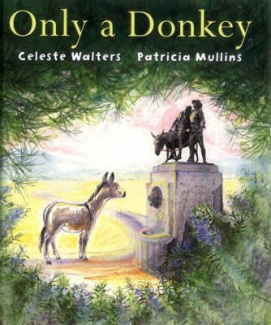
And the second will be a photo montage with crayon and watercolour based on the artwork of Patricia Mullins in the book, Only a Donkey.

Saturday, 21 April 2012

Getting Set for Science

This term we are doing a chemistry unit in Science. Our work will be based on the "All mixed-up" unit from Primary Connections.
The Science Understanding content from the Australian Curriculum for this unit is: Different materials can be combined, including by mixing, for a particular purpose.
There are so many exciting ideas on Pinterest and in teaching blogs for potions and creative mixing, so I have been trying to organise all of my thoughts and ideas and work out how much is humanly possible for us to do in one term!
Yesterday I decided to get organised with all the basic ingredients and tools we will need to do the experiments in the Primary Connections unit, plus a few others that I know I won't be able to resist.

I am collecting recipes and procedures at the moment and am working on formatting them simply for my Year 2s to read. Then I hope they will be able to use the cards I make to follow directions and create something, then write a recount of their experience. This way I can do a little bit of reading and writing through the science. And plenty of art fun too!


I did a little science experiment myself this morning to test which of our paints was going to be best for our background wash on the poppy prints we will do. It will be a simple wash with salt sprinkle.
I used edicol paint (in khaki, although obviously we will use blue for the sky tomorrow)
acrylic paint mixed with water
and watercolour paints (from little trays)

I sprinkled them with salt while they were still wet to see which one gives the desired "cloud" effect.
I am tossing up between the edicol and the acrylic wash. The edicol worked immediately but the acrylic wash has turned out well after it is completely dry.
Science in art - I love it!

Term 2 Classroom Tour

I rearranged a few things over the Easter break and since I just love looking at photos of other people's classrooms and getting new ideas, I thought I would share mine, just in case I'm not the only one.
If you want to see my old layout, read this post: A Classroom Tour
Why the changes?
Well, I originally put my carpet square under most of my desks to absorb the noise. I am upstairs and on vinyl floors. Every time my kids get up from their desks or sit down again, there is a noise and it is heard downstairs. I had also wanted a large space at the back (side? not sure where the front of the room is...) near my display wall so it was easy to access. The problem was that I didn't end up with much floor space and during floor time when I really want them to be listening and focussed, they were cramped and distracted.
A big aim for me this term is to help them become more settled listeners. I am going to be reading Charlotte's Web to help build their listening stamina, and also introduce some meditative prayer.
I needed a big floor space, so now I have one.
The big floor space will mean that we can play more games and be more active too.
The drawbacks are that I have lost the "little spaces" around the room that were useful during read to self or if they were working in a group.
(And my downstairs colleagues will probably tell you that I am even noisier than before!)
I still have one little space at the back. So long as the teacher next door doesn't open the door and squash someone...
The big pink ball is on loan from the PE teacher. I am trialling it to see if it helps my kids with poor posture. The problem is that the novelty value hasn't worn off yet so it is a bit distracting. I think it might also be a tad too big for my Year 2s as well. If it is successful then I will look at getting a few of them. That should help with the novelty factor too.
Now my desks are in groups around the huge carpet square. There is not much space behind the desks but still enough for me to get to every child.


I am seriously considering changing my word wall completely. At the moment it is alphabetical but every time I need to change the back display I have to squeeze them over or spread them out again. The wonderwall and velcro dots make it pretty easy, but it would be even easier if I didn't have to do it!
I am also finding that they are really struggling with our grammar program. We are using a text, and while I loved this text in Year 4, it is really hard with Year 2 (partly because the new Australian Curriculum is harder too). There are too many new concepts being introduced before the last ones are consolidated. So... I'm going to rearrange my word wall with the words sorted according to the parts of speech instead.

This display has been up all year since about Week 2 but I have left it up until now because the students often use these "noun words" when writing. (And it looks great.) It has been more successful than the word wall. I'm just not sure if I can fit these anywhere else in the room to keep them. Maybe I will take them down and make them into a book.

So that's where I am at at the moment. Some of the changes are huge improvements but there is always a trade off. I am still happy with the feel of the space and it seems to be working - so far...

A Day to Remember

Yesterday afternoon I went along to the launch of Jackie French's new book about Anzac Day: A Day to Remember.

I had been quite fortuitous to have noticed the book and decided to borrow it straight away, since our teacher-librarian was just on her way to book herself in to go to the launch and invited me to join her if I liked.
I jumped at the chance to learn first hand about this book that looks like it will effectively support what I am trying to achieve through our Anzac mini-unit, and I am glad I did.
After acting like groupies and having our photos taken and books signed by both the author, Jackie French, and the illustrator, Mark Wilson, we were given the opportunity to hear from a gentlemen, now in his late eighties, who had served in World War II.
His story was so interesting that we insisted he tell us the rest of the story over a cup of coffee (which unfortunately for him, went cold because he was so busy answering all of our questions).
I am grateful for the opportunity to hear the story and to learn more about the stories behind Jackie French's new book since it will enrich the way that I am able to present ideas about Anzac Day for my class.
Jackie's new book is a history of Anzac Day itself, and not simply restricted to the events of 25th April, 1915 at Gallipoli.
This matches perfectly with what we are doing, which is looking at the story over time of our local memorial and its changing meaning and symbolism for people.
I remember as a child the concerns that Anzac Day was becoming redundant as less and less diggers were marching each year as they became more frail or passed away.
I know that my own attitude to Anzac Day has changed. I sometimes see it as a celebration of war, encouraging people to see violence and fighting as a way forward and this goes against the grain of my own beliefs. I respect that those who do serve their country do it with the best of intentions and I am grateful for their courage and bravery, but I am also angered by the way that young boys (and many of them were) were encouraged into a situation which would have been so horrible it can't be imagined, and they had no control over it.
I hope that by commemorating Anzac Day, we will look back at the atrocities of war and search for better ways of solving our problems now and in the future.
I think it is great that we have students in our schools from countries all over the world, who at one time would have been considered enemies just because of their heritage and now we can meet them as people and appreciate that we have more in common than not, and that peace and harmony are something worth striving for.
I'm just still not sure that guns and force are the best way to achieve this peace. Our students of today may find a new way to solve the problems of the future if they never forget the pain of the past.